 Key Takeaways
- Neurological Co-Regulation: A child’s nervous system is biologically wired to mirror their parents'; if a parent is stuck in “fight or flight,” the child’s system will often follow suit.
- The HRV Connection: Heart Rate Variability (HRV) shows that family stress patterns synchronize, meaning a dysregulated Vagus Nerve in one family member can affect the entire household’s collective calm.
- Beyond Behavior: “Velcro” behavior or separation anxiety is often a sign of Dysautonomia—an imbalance where the child’s system doesn’t feel safe enough to “unplug” from the parent’s regulation.
Have you ever noticed how the “vibe” of your house changes the second someone walks in the door with a bad mood? It’s not just in your head—it’s in your biology! At Health From Within Orland Park, we see this every day: stress isn’t just a feeling; it’s contagious.
Why does my baby or toddler seem to “catch” my stress?
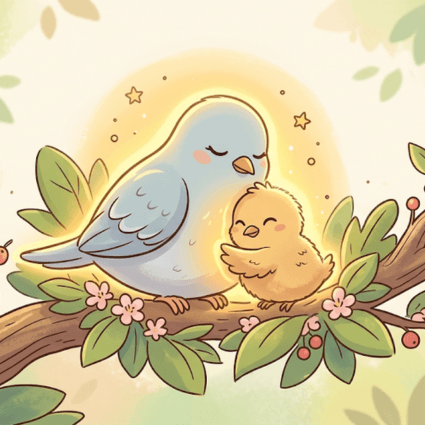
Children act like “neurological sponges,” picking up on their parents’ nervous system states through a process called co-regulation. Your nervous system doesn’t live on an island. It’s constantly “talking” to the people around you. Families in Orland Park and the surrounding Chicago suburbs often visit Health From Within Orland Park because they realize that when Mom or Dad is wound tight, the kids are more prone to meltdowns and restless sleep.
Can stress during pregnancy affect my baby’s nervous system?
Yes, elevated cortisol levels during a “Perfect Storm” pregnancy can pre-wire a baby’s nervous system to stay in a high-alert state before they are even born.
This is often why some babies are “Velcro babies”—they struggle to self-soothe because their Parasympathetic (rest and digest) system hasn’t been properly activated. These children aren’t “difficult”; they are neurologically seeking the safety of your regulated system because theirs is stuck in survival mode.
Why isn’t individual therapy or sleep training working for us?
Treating one family member in isolation is like trying to fix a single leaf on a tree when the soil itself is stressed.
In our office, we look at the whole family’s Proprioception and sensory processing. If the home environment is stuck in a cycle of chaos, “individual” fixes like sleep training often won’t stick. To get lasting results, we have to look at how the entire family’s nervous systems are communicating.
How do we break the cycle of family stress?
Healing happens when we shift the entire family from a state of fight-or-flight into a “shared regulation field” where everyone’s nervous system supports the others.
By focusing on the Vagus Nerve—the body’s “on switch” for healing—we can help parents and kids alike move out of Dysautonomia. When the “roots” of the family (the parents) are regulated and calm, the “branches” (the children) naturally begin to settle, eat better, and sleep deeper.
What is the first step to a calmer household?
The first step is measuring the neurological health of the family members to identify where the “stress blocks” are occurring.
Instead of another behavior chart or a new supplement, we use objective scans to see how your nervous system is handling life. When you regulate the master controller, you don’t just survive the chaos—you transform it.
Let’s Get Your Family Thriving
You don’t have to stay in survival mode. If you’re ready to see how neuro-functional care can bring peace back to your home, we’re here to help!
- Dive Deeper: Read about The Science of Co-Regulation and how your “energy” affects your child’s brain.
- Our Approach: See how our Webster Technique and pediatric care help balance the nervous system from the very start.