
Why Winter Feels Like a Breaking Point for Your Child
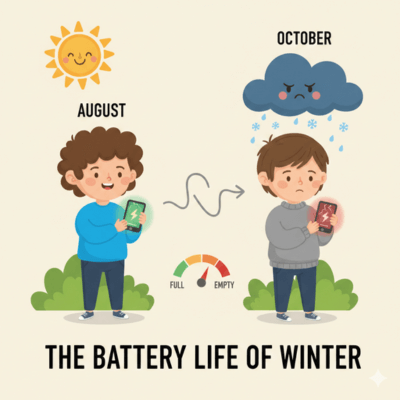 Every year, it’s the same story.
Around September, you’ve got your rhythm. But as the days get shorter, you watch your child’s motivation just evaporate. Their energy tanks, and the meltdowns you thought were under control start happening three times a day. The anxiety is back, and it’s louder than ever.
You’ve heard the standard explanations: it’s “Seasonal Affective Disorder.” It’s the lack of sunlight. The solution? Buy a light box, add a supplement, or maybe consider a prescription.
But if you’re like most parents, one question keeps nagging at you: Why does my child struggle so predictably every single year while their siblings or classmates seem totally fine?
The answer changes everything about how you look at your child’s health—not just in the winter, but all year round.
The “Empty Battery” Reality
Think about your smartphone. When it’s at 100%, it handles everything—streaming, GPS, 20 open tabs—without a glitch. But when that battery hits 5%, even opening a text message feels like a struggle for the phone.
Your child’s nervous system has a battery, too.
The nervous system has two main settings:
1. The Gas Pedal (Sympathetic): This kicks in when they need to focus or handle a challenge.
2. The Brake Pedal (Parasympathetic): This is what handles resting, digesting, sleeping, and staying calm.
In a healthy system, a child shifts smoothly between the two. But for many of the kids we see, the gas pedal is stuck to the floor, and the brakes are broken. This is called “sympathetic dominance,” and it’s exhausting.
Why Fall and Winter Are the “Final Straw”
Seasonal changes aren’t just about wearing coats. For a child’s body, winter is a massive to-do list. Their nervous system has to:
- Reset their internal clock to new light patterns.
- Keep their mood steady with less Vitamin D.
- Regulate body temperature.
- Keep the immune system on high alert.
For a child with a “full battery,” these shifts happen in the background. But for your child, whose system is already maxed out? These demands hit like a ton of bricks. The battery hits zero, and that’s when the winter crash happens—the sleep battles, the tummy aches, and the emotional outbursts.
This Didn’t Start in October
Here’s the part most doctors don’t mention: This vulnerability didn’t start a few weeks ago. It’s often a “perfect storm” that’s been building for years:
- Before Birth: If you were under high stress during pregnancy, your baby’s system was essentially programmed to stay on high alert before they were even born.
- Birth Stress: Interventions like C-sections or vacuum extractions can put physical pressure on the vagus nerve (the body’s main brake line).
- The Early Years: Colic, reflux, and ear infections are often early smoke signals that the nervous system is struggling to regulate.
By the time they hit elementary school, these struggles get labeled as ADHD, sensory processing disorder, or anxiety. But really, it’s just a nervous system that has been stuck in survival mode for a long time.
There Is a Way to “Recharge”
If this sounds like your child, please hear this: Your child isn’t broken. Their system is just overwhelmed.
You’ve probably tried the light boxes, the diets, and the melatonin. And while those are great band-aids, they don’t fix the stuck gas pedal.
That’s where we come in. At Health From Within Orland Park, IL, we use neurologically focused chiropractic care to find where that stress is trapped. We don’t fix seasonal depression; we help release the physical tension that’s keeping your child in survival mode.
When we help the body find its brake pedal again, parents tell us the same thing: “They’re finally sleeping,” “The meltdowns have stopped,” or “They just seem more comfortable in their own skin.”
This Winter Can Be Different
You don’t have to white-knuckle it until spring. You’ve been an incredible advocate for your child, and you’ve tried everything. Now, let’s try addressing the root cause.
Here is your game plan:
1. Stop the guilt. This isn’t about parenting; it’s about biology.
2. Look for the pattern. If this happens every year, it’s a nervous system signal.
3. Get a neurological stress scan. Come see us at Health From Within Orland Park (or find a local provider at the PX Docs directory). Let’s actually measure how much charge is left in your child’s battery.
Let’s help your child do more than just survive the winter—let’s help them thrive through it.
CONTACT US